
Bathroom membranes
Full bathroom waterproofing treats the floor, shower walls to the required height, and all junctions as one continuous system. The scope should name the product, the coverage and the cure protocol.
Adelaide service guide
Wet-area waterproofing is the concealed water-management layer beneath a tiled finish. A useful scope identifies the substrate, corners, penetrations, waste, threshold and wall-floor junctions rather than reducing the job to a membrane brand or a single coat count.
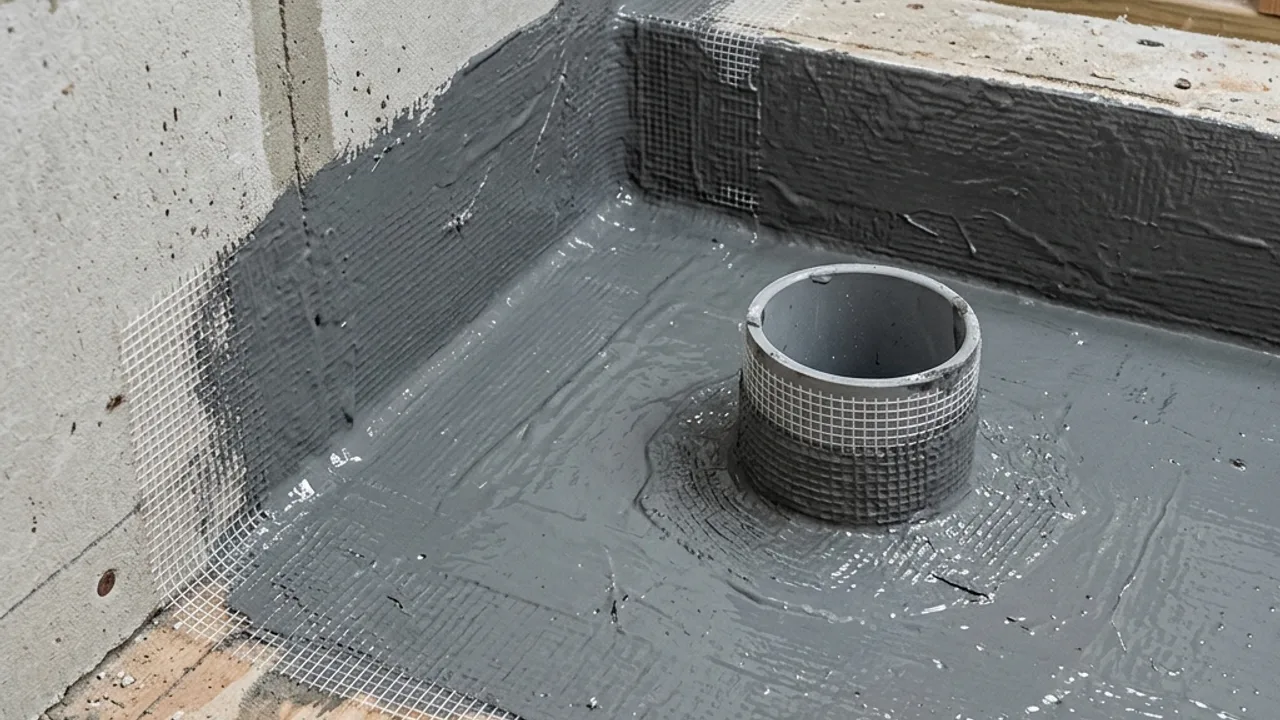
The existing base must be assessed before selecting a compatible system. Preparation, bond breakers, reinforcing details, coverage, curing and the handover to tiling all need to be sequenced as one documented scope for the Adelaide climate.
Waterproofing in Adelaide bathrooms, laundries and ensuites starts with what is underneath the membrane. Timber floors, old screeds, fibre-cement sheets and concrete slabs each need different preparation, primers and movement accommodation. A membrane that bonds well to one substrate may not be specified for another, so the product choice follows the substrate assessment rather than leading it.
Critical details occur at changes of plane and penetrations. Wall-floor junctions, internal corners, pipe entries, wastes, shower curbs and door thresholds all need reinforcing fabric, bond breakers or compatible sealant depending on the system. These are the locations where moisture first appears in a neighbouring room or downstairs ceiling, long before the field area fails.
Cure time and access are part of the system. Most liquid membranes need a controlled cure before flooding, tiling or traffic, and that timing affects the broader renovation schedule. In occupied Adelaide homes, agreeing when the room can be left undisturbed is as important as the number of coats applied.
Full bathroom waterproofing treats the floor, shower walls to the required height, and all junctions as one continuous system. The scope should name the product, the coverage and the cure protocol.
Showers concentrate water at the waste, curb, niche and door threshold. Reinforcing at these junctions is more important than a thick coat in the middle of the wall.
Laundries often have lower water exposure than showers, but floor wastes, washing-machine taps and adjoining timber floors still need protection at the junctions.
A waterproofing certificate or warranty is only as reliable as the preparation and detailing that support it. Ask what substrate condition is assumed, whether bond breakers are needed, and how the membrane terminates at drains and thresholds. In South Australia, building work contractor licensing may apply, so the operator's licence details should be available on request.
The handover from waterproofer to tiler needs to be explicit. Tiling too early can damage the membrane; waiting too long can delay the project. A written sequence that names cure times, inspection points and responsibility for each stage keeps both trades aligned.
Adelaide's wet-area waterproofing requirements are shaped by a Mediterranean climate and varied housing stock.
In Adelaide, waterproofing failures often trace back to junction detailing rather than the membrane field. Older homes with timber floors, renovated villas with multiple substrate types, and coastal apartments with balcony exposure each need a system matched to the actual surface. The South Australian building work contractor licensing framework applies to much of this work, so the scope should note how compliance will be demonstrated.
Seasonal temperature swings and occasional heavy winter rains test waterproofing over time. A membrane that looks sound at handover can fail if movement joints, bond breakers and cure protocols were rushed. For apartments and townhouses, the stakes are higher because a leak can affect neighbouring properties, making documentation and inspection records particularly important.
Record the room, its use, any moisture symptoms and the substrate type. Note when the problem started and any previous repairs.
Assess substrate soundness, existing membrane remnants, movement cracks and the condition of junctions around wastes and thresholds.
Choose a compatible system, confirm coverage areas, reinforcing details, cure times and the records that will be supplied at completion.
Sequence preparation, membrane application, curing, inspection and tiling so each stage protects the last.
Tiles and grout are finishes, not substitutes for a continuous membrane.
Movement or poorly prepared junctions can compromise otherwise sound field coverage.
Tiling before the specified cure sequence is complete can undermine the system.
The enquiry records the room, substrate and moisture symptoms upfront.
Product documentation and installation sequencing stay visible in the scope discussion.
Claims about compliance or licensing are not made without verified operator details.
Quotes for wet-area waterproofing can use different assumptions about removal, disposal, levelling, preparation, trims, sealants and cleaning. Compare those items line by line, confirm any applicable operator licence, and check product suitability against the actual surface and exposure.
Where the wet-area waterproofing project crosses into another layer, review wet-area waterproofing, bathroom tiling or shower repair diagnosis before finalising the brief.
Place each waterproofing quote beside the same brief and mark different assumptions. Check preparation, disposal, priming, reinforcing, coverage, cure time, flood testing, cleaning and handover records. If the substrate condition is uncertain, require a written inspection before the membrane is selected.
Read the proposed waterproofing system from the substrate upward. Confirm responsibility for each junction, the nominated product data sheet, access restrictions during curing, and the evidence retained before tiling conceals the work. Keep certificates, photographs and spare material where practical.
Pick your suburb for the local notes, or submit the form for a free review.
Wet-Area Waterproofing
Clarify your wet-area waterproofing scope
Send the room, condition and outcome you are working towards.