
Regrouting
Regrouting refreshes the visible joint between tiles. It can improve appearance and reduce surface water penetration, but it does not repair a failed membrane or plumbing leak.
Adelaide service guide
Cracked grout, failed sealant, loose tiles or moisture outside a shower are symptoms, not a diagnosis. The sensible first step is to separate a surface maintenance issue from plumbing, substrate or membrane failure before committing to a repair method.
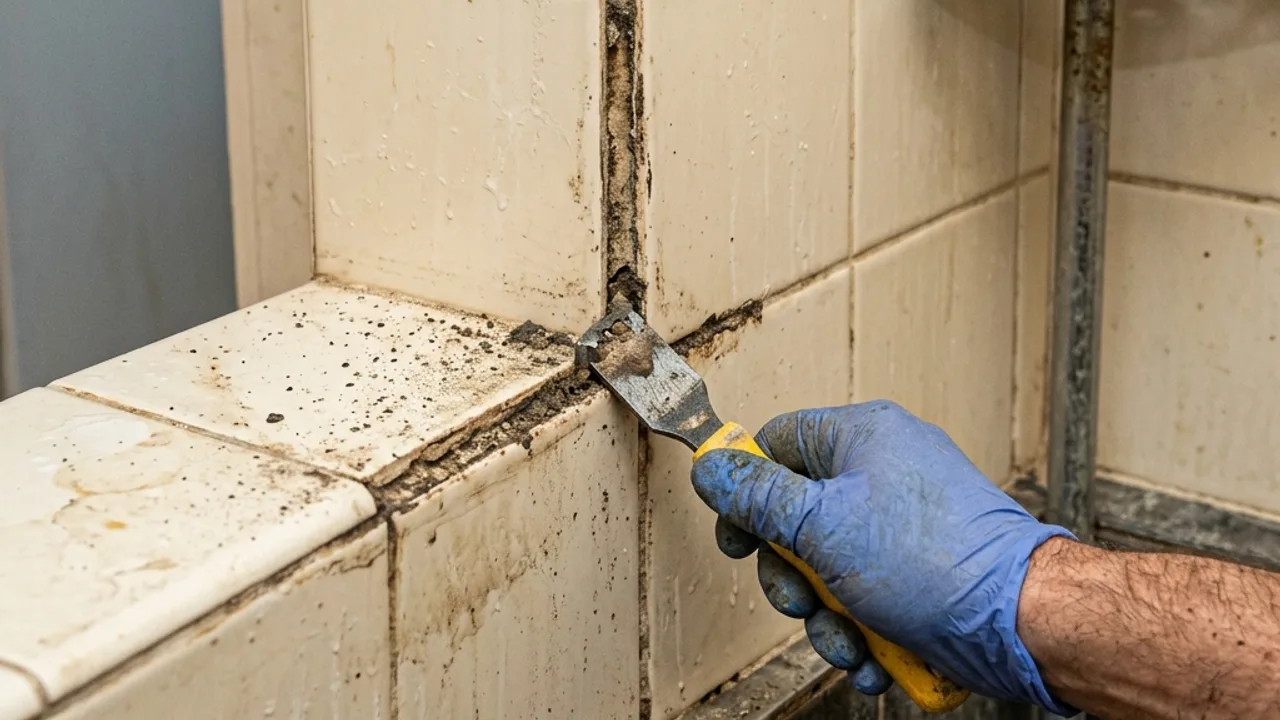
Record where moisture appears, when it appears and what has already been repaired. Inspect joints, penetrations, wastes and adjacent finishes before deciding whether regrouting, a local repair or a larger strip-out is justified in an Adelaide home.
Regrouting is appropriate when the grout itself has deteriorated but the substrate, waterproofing and waste connections remain sound. In Adelaide's hard-water areas, grout can become porous or discoloured without the membrane having failed. The test is whether water is appearing outside the shower after normal use, or whether the problem is limited to appearance and joint integrity.
Localised tile replacement can rescue a small area of damage, but it depends on matching the existing tile and not disturbing the membrane underneath. In older showers, the original tile may be discontinued or the batch colour may have shifted with age. Removing one tile can also weaken its neighbours if the adhesive is well bonded, so the scope should include a fallback if the local repair cannot be completed cleanly.
When moisture appears on a wall or ceiling outside the shower, the cause may be plumbing, membrane failure or failed sealant at the screen or door. Tracking the leak path often requires controlled testing: plug the waste, fill the shower to a shallow level, and observe where water appears. This kind of diagnosis should precede any promise that the problem can be fixed without removal.
Regrouting refreshes the visible joint between tiles. It can improve appearance and reduce surface water penetration, but it does not repair a failed membrane or plumbing leak.
Perimeter and expansion sealants flex with movement. Cracked or mouldy sealant at the screen, door or junctions is often the first maintenance item to address.
Replacing a few damaged tiles works when matching stock is available and the substrate beneath is sound. The repair area should be tested for bond before surrounding tiles are disturbed.
The biggest risk in shower repair is treating symptoms while the concealed path remains active. Fresh grout and new sealant can look good for months while moisture continues to migrate through a failed junction or cracked waste. A proper repair scope therefore distinguishes between cosmetic renewal and leak resolution, and it records the uncertainty where the cause has not been fully exposed.
Strip-out and rebuild becomes the practical option when multiple layers have failed, the substrate is wet, or the waterproofing has reached the end of its service life. This is a larger investment than regrouting, but it is the only route when the concealed system is compromised. The scope should state what is removed, how far the waterproofing extends, and what completion records are provided.
Adelaide shower repairs often involve diagnosing whether the problem is surface wear or a deeper concealed failure.
Adelaide's hard water can accelerate grout discolouration and sealant degradation, making a shower look worse than it is. The key question is whether water is escaping the shower envelope during normal use. Controlled flood testing, waste plugging and inspection of adjacent walls help separate regrouting jobs from those needing waterproofing or plumbing work.
In older Adelaide homes, showers may have been retiled several times over original timber or early screed floors. Multiple tile layers add height and weight, and can hide previous repairs. A scoped repair should say what will happen if matching tiles cannot be sourced, or if removal reveals a wet substrate that needs more than a local fix.
Record when the leak or damage started, where water appears and what previous repairs have been attempted. Photographs of grout, sealant and adjacent walls help.
Test the waste, screen sealant, grout condition and adjacent surfaces. Determine whether the problem is surface, plumbing or membrane related.
Choose between maintenance regrouting, local repair or strip-out based on the diagnosis, not on the cheapest first quote.
If plumbing or waterproofing is involved, sequence those trades before the final tiling and sealant are completed.
Fresh grout can hide a deeper leak without resolving its cause.
Removing isolated tiles may damage neighbouring finishes or the membrane below.
Matching an older tile can limit the practicality of a local repair.
Diagnosis comes before promising a cosmetic fix.
The repair extent is explained with the uncertainty still visible.
No no-demolition outcome or leak guarantee is invented before inspection.
Quotes for shower repairs & regrouting can use different assumptions about removal, disposal, levelling, preparation, trims, sealants and cleaning. Compare those items line by line, confirm any applicable operator licence, and check product suitability against the actual surface and exposure.
Where the shower repairs & regrouting project crosses into another layer, review wet-area waterproofing, bathroom tiling or shower repair diagnosis before finalising the brief.
Place each shower repair quote beside the same brief and mark different assumptions. Check diagnosis method, removal extent, disposal, waterproofing scope, tile matching, sealant, cleaning and what happens if the cause is deeper than first assumed.
Read the proposed repair from the symptom back to the source. Confirm how the operator will test for leaks, what records will show the concealed condition, and how variations are handled if removal reveals further damage. Keep photographs and product details for warranty and maintenance.
Pick your suburb for the local notes, or submit the form for a free review.
Shower Repairs & Regrouting
Clarify your shower repairs & regrouting scope
Send the room, condition and outcome you are working towards.