
Alfresco tiling
Alfresco tiling needs movement joints at slab boundaries, falls that drain away from the house, and a product that tolerates exposure and temperature cycles.
Adelaide service guide
Outdoor tiling must suit exposure, drainage, movement and the way people use the surface. An alfresco slab, balcony, front step and pool-adjacent path are not interchangeable simply because the same tile can be ordered for an Adelaide property.
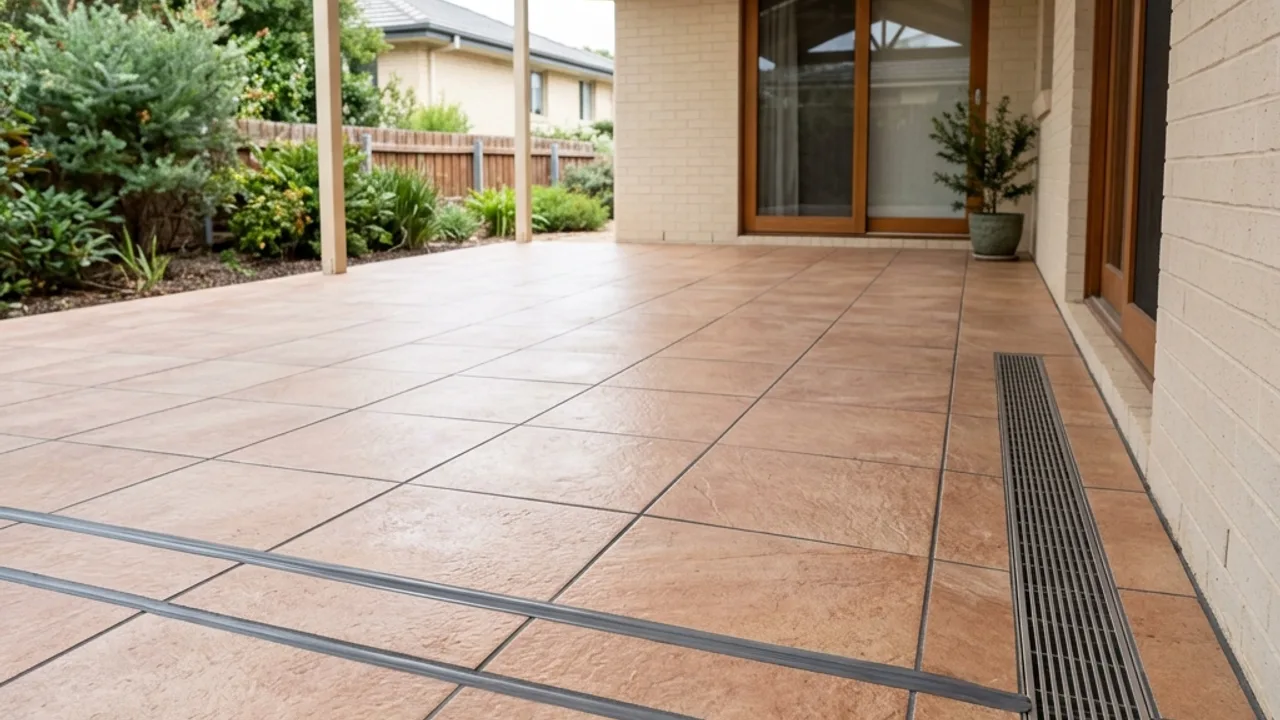
Confirm the substrate, falls, drainage path, perimeter joints, threshold heights and product suitability for the location. Coastal exposure and wind-driven weather can also change maintenance and detailing priorities.
Alfresco tiling in Adelaide connects indoor living to garden or pool areas. The slab may be the same pour as the house or a separate pour with an expansion joint in between. If that joint is not carried through the tile field with a movement-control joint, cracks can appear exactly where the two slabs move independently during hot summers and cool winters.
Balcony tiling carries the highest risk profile of any residential tiling job. The substrate must be waterproof before tiles go down, falls must drain to the outlet without ponding, and perimeter joints must accommodate building movement. In coastal suburbs, salt-laden air also accelerates corrosion at outlets, angle trims and fixing systems, so material selection has to look beyond colour.
Entry steps and paths see foot traffic, garden debris and cleaning chemicals. Slip resistance becomes a safety issue, particularly when the surface is wet from Adelaide's winter rain or pool splash. The right tile for a sheltered entry may be unsuitable for a north-facing step that receives direct sun and leaf litter.
Alfresco tiling needs movement joints at slab boundaries, falls that drain away from the house, and a product that tolerates exposure and temperature cycles.
Balconies need a waterproof substrate, precise falls to outlets, perimeter movement joints and materials suited to wind-driven rain and salt exposure.
Steps and entries need slip resistance, durable edges and a detail that manages water and debris without staining or creating a trip hazard.
Substrate preparation outdoors is often more involved than indoors. Existing concrete may need grinding, patching or screeding to achieve falls. Timber decks converted to tiled surfaces may need structural engineering and a decoupling membrane. Each substrate type changes the system, the cost and the expected lifespan.
Maintenance access is part of the design. Outlets need to remain clear of grout and debris, perimeter sealants need periodic replacement, and expansion joints must not be hidden by skirting or garden beds. A scope that ignores these details can look perfect at handover and fail within a few seasons.
Confirm membrane, joint and exposed-edge interfaces in the written scope.
Record nearby moisture symptoms as a separate diagnostic question.
Adelaide outdoor tiling has to survive hot dry summers, winter rain and, in coastal suburbs, salt-laden air.
Alfresco and balcony tiling is popular in Adelaide because the climate invites year-round outdoor living. However, temperature swings between summer and winter put movement joints and adhesives under stress. North-facing steps and alfresco areas also face intense UV, which can affect grout colour and sealant life.
Coastal suburbs add salt exposure to the mix, accelerating corrosion at drains, angle trims and fixing systems. Balconies over living spaces need a complete waterproofing system beneath the tiles, with falls confirmed before the field is laid. A written scope should separate substrate preparation, membrane work, tiling and ongoing maintenance access.
Share the outdoor area, its use, exposure direction, existing substrate and any drainage problems. Note proximity to pools, gardens or the coast.
Check slab condition, falls, outlet positions, expansion joints and whether a waterproof membrane is required beneath the tiles.
Select a product with suitable slip, absorption and exposure ratings, and detail movement joints, thresholds and drainage.
Sequence substrate repair, waterproofing where needed, tiling, joint installation and protection before the area is put back into use.
A product suited indoors may not meet the practical slip or exposure needs outside.
Poor falls can hold water against thresholds or create staining and maintenance problems.
Movement at edges or slab joints can appear through a rigid finish.
Exposure and drainage are addressed before colour or pattern dominates the decision.
Balcony waterproofing claims wait for a site-specific assessment.
The scope distinguishes tile suitability from installation and substrate requirements.
Quotes for outdoor & alfresco tiling can use different assumptions about removal, disposal, levelling, preparation, trims, sealants and cleaning. Compare those items line by line, confirm any applicable operator licence, and check product suitability against the actual surface and exposure.
Where the outdoor & alfresco tiling project crosses into another layer, review wet-area waterproofing, bathroom tiling or shower repair diagnosis before finalising the brief.
Place each outdoor tiling quote beside the same brief and mark different assumptions. Check substrate preparation, falls, drainage, movement joints, product ratings for slip and exposure, waterproofing scope, cleaning and handover records. If falls need to be built up, confirm the thickness and its impact on thresholds.
Read the proposed outdoor system from the substrate to the surface. Confirm responsibility for waterproofing, how expansion joints are handled, and what maintenance access is retained. Keep product data, spare tiles and care instructions so the finish performs through Adelaide's seasonal cycles.
Pick your suburb for the local notes, or submit the form for a free review.
Outdoor & Alfresco Tiling
Clarify your outdoor & alfresco tiling scope
Send the room, condition and outcome you are working towards.